New Tools Offer Major Hope for Malaria Elimination as Scientists Push for Next-Generation Solutions - Prof. Amewu Says
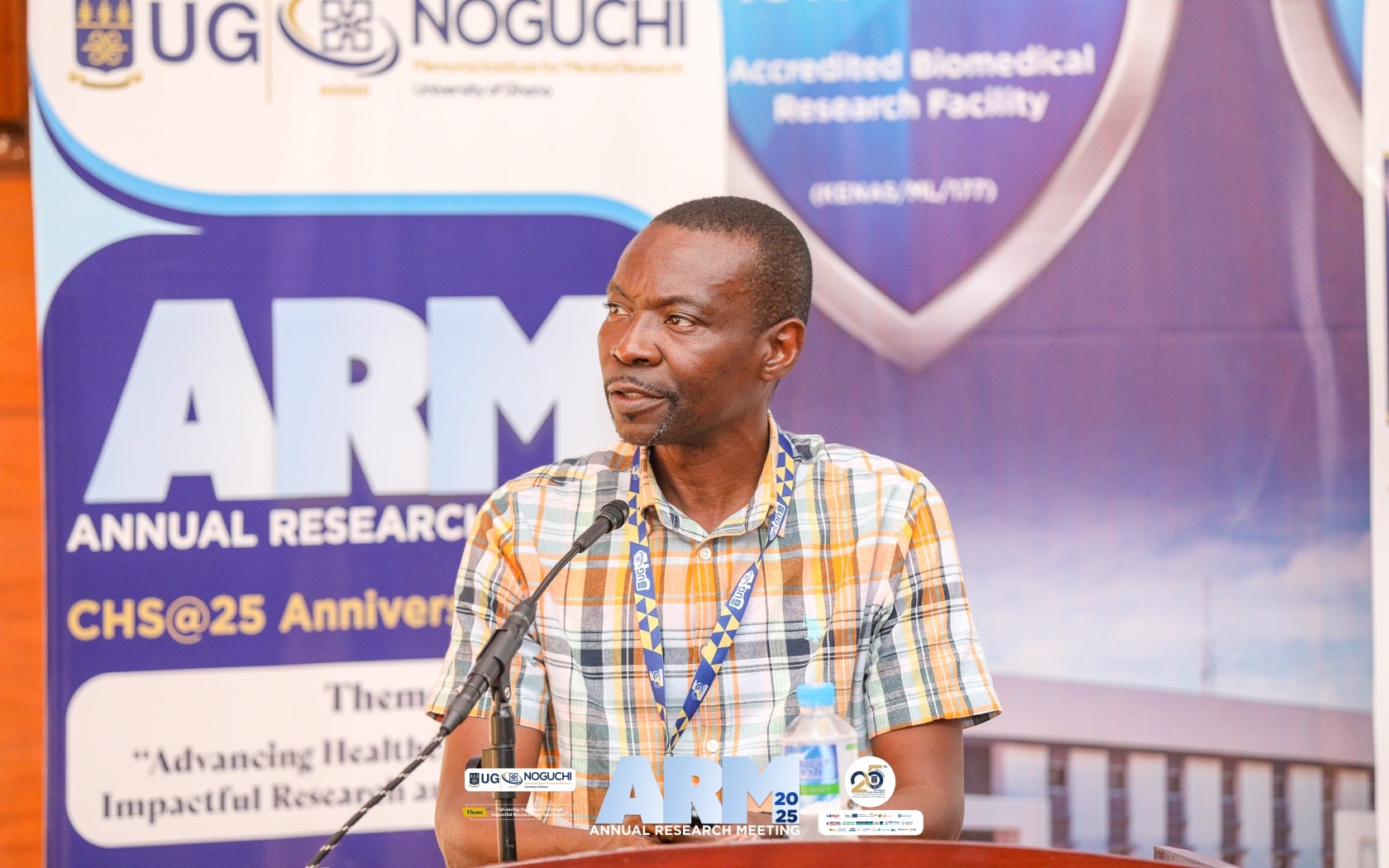
A leading Medicinal Chemist at the University of Ghana and Founding Director of Ghana’s Drug Innovation Group (DIG), Prof. Richard K. Amewu, has said the global fight against malaria is entering a “promising new phase.” This, according to him, is driven by advanced diagnostics, innovative vector control methods and a new pipeline of next-generation antimalarial drugs and vaccines.
He made this known during a presentation at the third plenary session of the 2025 Annual Research Meeting (ARM) of the Noguchi Memorial Institute for Medical Research (NMIMR), where he spoke on “Accelerating Malaria Elimination in the Next Decade: Designing and Implementing Novel Prevention Tools.”
The four-day research meeting, held from Tuesday, November 25 to Friday, November 28, 2025, brought together researchers, policymakers, global health partners and industry experts for plenary sessions, keynote presentations, symposia, poster sessions and breakout discussions, purposed to strengthen interdisciplinary collaboration and advance public health research.
Speaking to an audience of scientists, policymakers and public health stakeholders, Prof. Amewu said progress in malaria research over the last decade has created opportunities that were previously unimaginable. “We are entering a new era of malaria innovation. If we design and deploy the next generation of tools effectively, the next decade could bring a major shift in malaria control and elimination,” he said.
The Drug Innovation Hub Director, however, warned that current interventions are facing growing pressure from drug resistance, insecticide resistance and a large reservoir of asymptomatic parasites that continue to sustain transmission.
He noted that one of the biggest challenges is the high number of infected individuals who show no symptoms but continue to live with malaria, explaining that new tools must therefore improve the detection and treatment of this “silent reservoir.”
Prof. Amewu highlighted several emerging technologies designed to strengthen surveillance and diagnosis, including genomic surveillance systems, AI-powered diagnostic platforms and digital tools that support real-time case tracking. He said these approaches could significantly improve early detection and resistance monitoring.
Prof. Amewu also discussed a range of next-generation vector control strategies, such as improved insecticide-treated nets, Attractive Toxic Sugar Baits (ATSBs), gene-drive mosquito technologies, the Sterile Insect Technique and the Incompatible Insect Technique. While these tools offer new ways to target mosquitoes more precisely, he stressed that issues such as resistance and logistical challenges must be addressed for them to be deployed effectively.
In his presentation, Prof. Amewu pointed to major breakthroughs in drug development, describing the Novartis Phase III trial of the next-generation malaria treatment KLU156 (GanLum) as a landmark achievement. “It comes at a critical moment as resistance to artemisinin grows,” he said. He also referenced other promising innovations, including non-artemisinin combinations such as ganaplacide/lumefantrine, single-dose curative therapies, long-acting injectables, tafenoquine and experimental approaches such as using nitisinone to make human blood toxic to mosquitoes.
Turning to vaccines, Prof. Amewu explained that although RTS,S and R21 represent significant milestones, their moderate efficacy and waning immunity make next-generation vaccines essential for durable protection. He said future vaccine development is expected to focus on mRNA platforms, genetically attenuated parasite vaccines, transmission-blocking vaccines and nanoparticle technologies. He added that next-generation vaccines must aim to deliver multi-year protection and target several stages of the malaria parasite, given that malaria infection does not typically produce sterilising immunity.
Prof. Amewu also emphasised that the effective deployment of these new tools will depend heavily on strong data systems and mathematical modelling. He noted that modelling helps countries design optimal strategies, predict the impact of interventions and assess cost-effectiveness, especially in resource-limited settings where strategic decision-making is critical.
Looking ahead, he said, scientific progress has created unprecedented opportunities for malaria elimination, but success will ultimately depend on political commitment, sustained financing and coordinated implementation. “The science is leading the way. What we need now are strong investment decisions and consistent deployment strategies to match the pace of innovation,” he said.
His presentation was one of several delivered at the Annual Research Meeting, which showcased scientific outputs from across Ghana and strengthened partnerships in areas including infectious diseases, genomics, environmental health, diagnostics, traditional medicine research and pandemic preparedness.