West Africa Centre for Global Environmental & Occupational Health Hosts Stakeholders Engagement Ahead of National Fora to Map Solutions for Galamsey
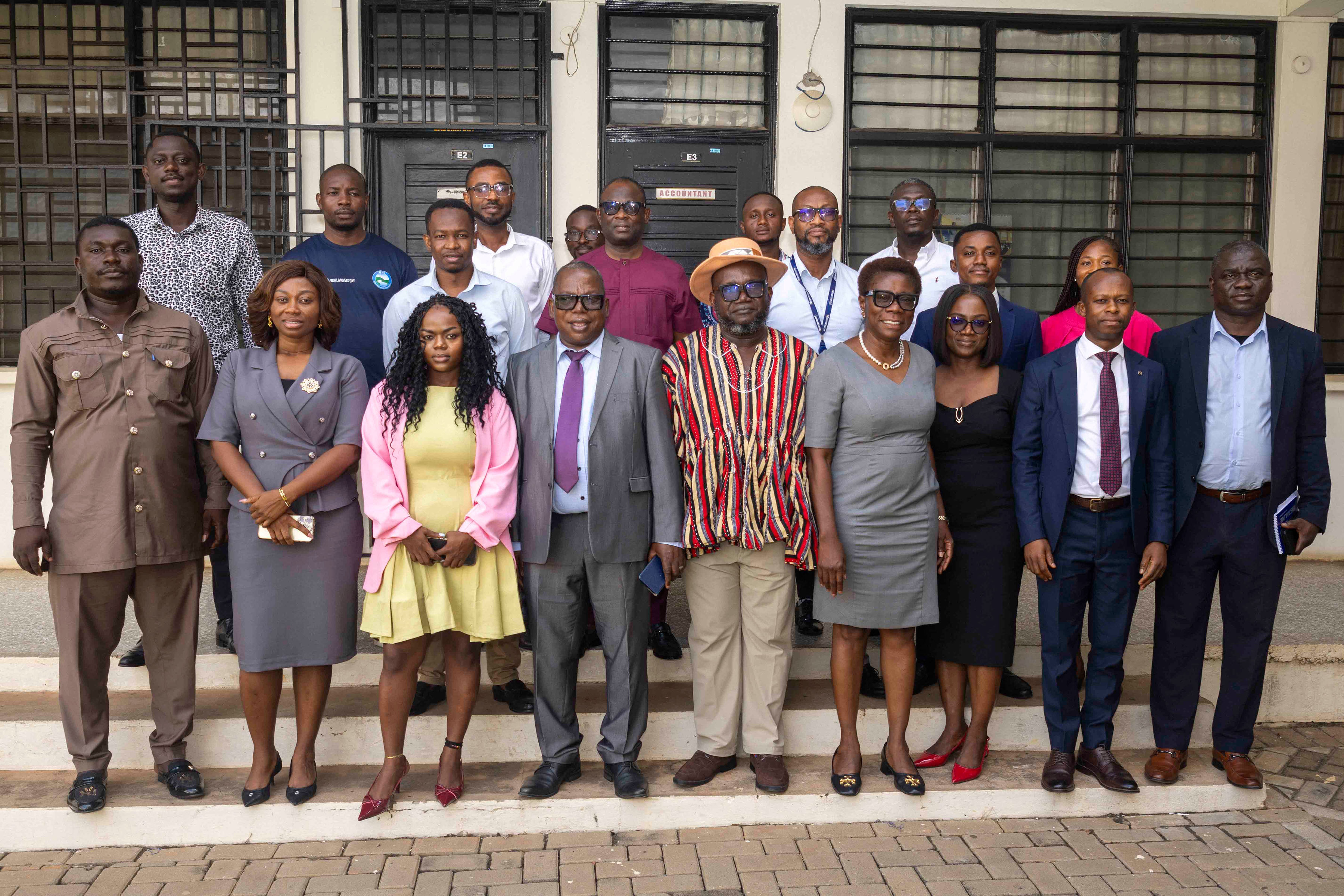
The West Africa Centre for Global Environmental & Occupational Health (WAC-GEOHEALTH) at the School of Public Health, University of Ghana, has convened a strategic working session with key stakeholders to chart a coordinated response to galamsey and restore degraded artisanal small-scale mining (ASM) sites in Ghana.
The session was held as part of the preparatory actions to set the stage for a national forum that will establish a unified framework for tackling illegal mining across the country.
Participants included representatives from the Ministry of Lands and Natural Resources, the Office of the Minister of State for Climate Change and Sustainability, the School of Public Health, Logiest Group Limited, international partners, industry partners such as the Ghana Gold Board and the Ghana Chamber of Mines, Artisanal Small-Scale Miners Association and private mining companies including Newmont Ghana Gold Ltd and Asanko Gold Ghana Ltd.
Setting the stage for the discussions, Prof. Julius N. Fobil, Director of WAC-GEOHEALTH, provided a historical and analytical overview of mining in Ghana, tracing its roots from indigenous gold extraction in the 10th century to large-scale commercial operations in the colonial and post-independence eras. He explained that while mining has historically been a key driver of the economy, the rise of illegal small-scale mining, popularly known as galamsey, has created profound environmental, social and economic challenges.

Prof. Fobil highlighted the wide-ranging consequences of galamsey, including extensive deforestation, destruction of arable farmlands, contamination of rivers and other water bodies, soil degradation and the spread of toxic substances such as mercury and cyanide that threaten public health. He warned that these impacts not only undermine Ghana’s natural resources but also compromise food security, livelihoods and long-term sustainable development.
“Galamsey has escalated into a national crisis that cannot be addressed by any single entity,” Prof. Fobil stated. “It demands coordinated, multi-sectoral efforts involving government agencies, local communities, industry players, civil society and development partners.” He noted that legitimate small-scale miners, who often operate with limited capital, outdated tools and little access to technical training, are particularly vulnerable. “Without support in the form of financing, skills development, and access to sustainable mining technologies, these miners are frequently pushed into informal or illegal operations,” he explained.
Prof. Fobil also laid emphasis on the need for comprehensive policy and legal interventions, including the establishment of clear regulatory frameworks, consistent law enforcement and fair benefit-sharing mechanisms to ensure that host communities gain from mining activities.
The WAC-GEOHEALTH Director called for targeted incentives to promote environmentally responsible practices, noting that a combination of regulation, support for legitimate miners and community engagement is essential to reversing the environmental damage caused by decades of uncontrolled artisanal mining.
“The session today is not just about highlighting problems; it is about finding practical, collaborative solutions,” he said. “Our goal is to map out strategies that can restore degraded sites, protect natural resources and create sustainable livelihoods for communities while safeguarding public health for current and future generations.”
Mr. Erastus Asare Donkor, a Ghanaian broadcast, investigative and environmental journalist with the Multimedia Group, highlighted the persistent challenges posed by galamsey. He noted that while Ghana has laws regulating small-scale mining, these rules are often poorly enforced, allowing illegal operations to flourish. According to Mr. Asare Donkor, the menace is fueled by weak regulatory enforcement, political interference, corruption, organised crime and the influx of foreign miners, emphasising that strong political will is urgently needed to curb the problem.
Tracing the history of mining and licensing practices, he pointed out that irregularities in the licensing system have further enabled the expansion of illegal mining. He also revealed that some illegal miners now operate with heavy equipment and armed protection, compounding enforcement challenges. Alarmingly, he indicated that about 50 forest reserves have reportedly been invaded and mining is taking place in areas explicitly outlawed, including settlements, communities and road networks, leaving homes and communal lands dug up and destroyed.
Mr. Asare Donkor stressed the severe environmental consequences, including water pollution, land degradation, biodiversity loss and air pollution and warned of the impact on agriculture, particularly cocoa production, which has suffered significant economic losses. He further highlighted that major water bodies used for farming have been heavily contaminated, posing a threat to food security and livelihoods.
Ing. Kenneth Ashigbey, CEO of the Ghana Chamber of Mines and convener of the Media Coalition Against Galamsey, emphasised the importance of distinguishing between illegal mining and legitimate small-scale operations to ensure effective interventions. He described the crisis as a national security threat, particularly due to the use of hazardous chemicals like cyanide and pledged the Chamber’s support for the national forum and ongoing efforts against galamsey.

Virtual participants from partner institutions in Scotland discussed the value of engaging illegal miners as part of the solution, while representatives from Goldbod advocated for a unified national framework to support sustainable gold-buying initiatives.
Mr. Benjamin Dwira, Managing Director of Logiest Group Limited, shared insights from reclamation efforts in the Amansie Central District of the Ashanti Region, highlighting that restored sites are being prepared for productive use, including agriculture, through the application of appropriate technology.
Madam Adiki Ayitevie, Director and Principal Consultant at iFORA CommEx, who facilitated the session, highlighted the importance of multi-stakeholder collaboration to address the fragmented response to galamsey. She emphasised that building consensus among stakeholders is critical to developing actionable and practical solutions.

Madam Ayitevie stressed that the session will help identify key priorities, gaps and resources, ensuring that the upcoming scoping workshop is well-structured and focused on tangible outcomes. She further noted that the engagement will enable stakeholders to align strategies, share experiences and strengthen partnerships for sustainable management and rehabilitation of mining-affected areas.
The session concluded with agreements on the objectives, structure and focus areas of the upcoming scoping workshop, along with an action plan assigning roles and timelines to ensure an effective, coordinated response to the galamsey challenge in Ghana.
