Human Activities Are Reshaping Mosquito-Borne Disease Risks in Africa – Prof. Yaw Asare Afrane
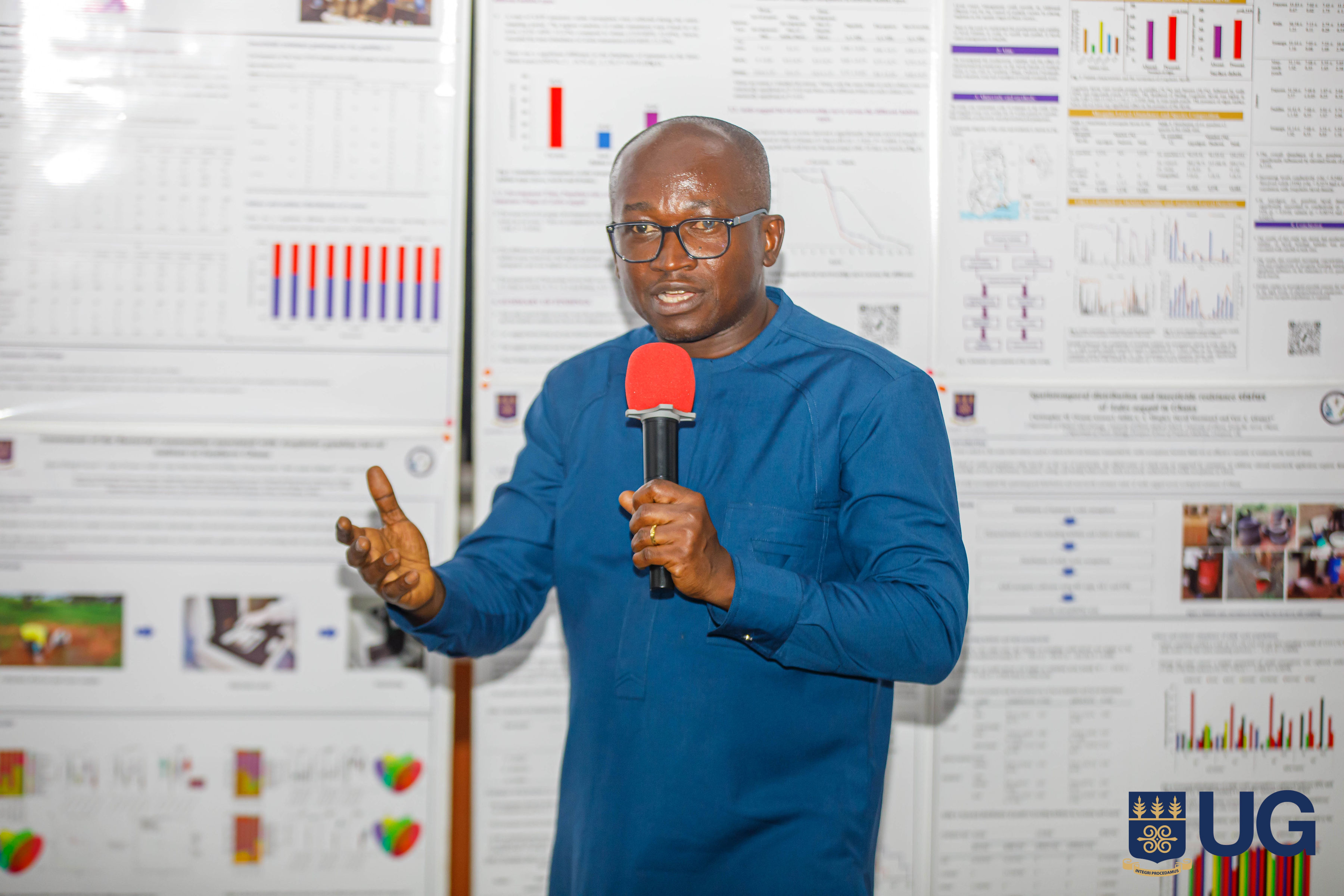
Human activities ranging from urban agriculture and deforestation to changing land use practices are creating new opportunities for mosquitoes to thrive and increasing the risk of mosquito-borne diseases across Africa, Professor Yaw Asare Afrane of the University of Ghana Medical School has observed.
Delivering his inaugural lecture at the University of Ghana, Prof. Afrane explored how environmental and human-induced changes are altering mosquito ecology and contributing to the persistence and emergence of diseases such as malaria, dengue, lymphatic filariasis, yellow fever and other arboviral infections. The lecture was delivered on the topic, “Fighting the Bite: Human Activities and the Changing Landscape of Mosquito-Borne Diseases in Africa.”
Drawing on over two decades of research in Ghana and across Africa, Prof. Afrane demonstrated how human behaviour and environmental modifications continue to shape mosquito breeding patterns, survival rates, disease transmission dynamics and the effectiveness of control interventions.
He noted that while mosquitoes have long been recognised as vectors of disease, their ability to adapt to changing environments presents new challenges for public health efforts.
Using evidence from studies conducted in Ghana and Kenya, Prof. Afrane explained how activities such as irrigated urban vegetable farming, deforestation, swamp cultivation and rapid urbanisation have created favourable breeding habitats for mosquitoes and increased their capacity to transmit diseases.
According to him, urban vegetable farms situated in low-lying areas often serve as breeding grounds for mosquitoes, effectively creating what he described as “rural hotspots within cities.” Similarly, environmental changes resulting from deforestation have been shown to alter local temperatures and humidity levels, creating conditions that favour mosquito survival and malaria transmission.
The Professor of Medical Entomology and Parasitology also highlighted growing concerns about emerging and re-emerging mosquito-borne diseases in Africa. While malaria remains a major public health challenge, he noted that dengue is becoming an increasing concern in Ghana, with more than 2,000 confirmed cases recorded in 2025.
He observed that dengue testing is not yet routinely integrated into healthcare services, resulting in many fevers of unknown origin potentially going undiagnosed.
Prof. Afrane further pointed to the growing threat posed by invasive mosquito species, including Anopheles stephensi and Aedes albopictus, which have been detected in Ghana and other African countries. These species, he explained, are capable of spreading malaria and arboviral diseases and have demonstrated remarkable adaptability to urban environments.
Another major challenge identified during the lecture was insecticide resistance among mosquito populations.
Prof. Afrane explained that the widespread use of pesticides in agriculture and insecticides in vector control programmes is contributing to resistance, making some conventional mosquito control tools less effective over time.
He also noted behavioural adaptations among mosquitoes, including shifts in biting patterns and increased outdoor feeding, which reduce the effectiveness of interventions that primarily target indoor mosquito populations.
While acknowledging the significant gains made through interventions such as insecticide-treated bed nets, indoor residual spraying and larviciding, Prof. Afrane argued that controlling mosquito-borne diseases in Africa would require broader and more integrated approaches.
He highlighted emerging mosquito control technologies including spatial repellents, endectocides and sterile insect techniques, while stressing the need to strengthen surveillance systems and invest in scientific research.
Prof. Afrane further called for renewed attention to environmental management as a critical component of mosquito control.
Among his recommendations was the revival of the former sanitation officer system (town council) under local government authorities to enforce environmental cleanliness and reduce mosquito breeding sites in communities.
He also advocated the inclusion of public health practitioners, particularly vector biologists, in urban and rural development planning processes to ensure that disease prevention considerations are incorporated into infrastructure and land-use decisions.
In addition, he underscored the need to build local scientific capacity by training more experts in vector biology, disease ecology and mosquito-borne disease control to support Africa’s growing public health needs.
“The fight against mosquito-borne diseases requires the collective effort of everyone,” he noted, stressing that communities, policymakers, researchers and local authorities all have a role to play in reducing disease risks.
Chairing the lecture, the Vice-Chancellor Prof. Nana Aba Appiah Amfo, commended Prof. Afrane for his important contributions to research on mosquito ecology, insecticide resistance and vector-borne disease control in Africa.
She noted that his work has contributed to shaping malaria control policies on the continent and has generated evidence that continues to inform public health interventions in Ghana and beyond.
The Vice-Chancellor further observed that the lecture was particularly timely as the country enters the rainy season, a period often associated with increased mosquito breeding and heightened disease transmission risks. She praised Prof. Afrane’s dedication to research, mentorship and capacity building, describing his career as one marked by impactful scholarship and service.
On behalf of the University community, Prof. Amfo congratulated him on attaining the rank of full Professor and for delivering an inaugural lecture that deepened understanding of one of Africa’s most pressing public health challenges.
In opening remarks, the Registrar of the University, Mrs. Emelia Agyei-Mensah, reiterated the significance of inaugural lectures within the University’s academic tradition.
She explained that inaugural lectures represent an important milestone in the academic journey of faculty members and provide an opportunity for the University community and the public to engage with the scholarly contributions of academics who have attained the rank of full Professor.
Mrs. Agyei-Mensah noted that the lectures also serve as a platform for celebrating excellence in research, teaching and service while highlighting the impact of University of Ghana scholarship on national and global development.
The lecture formed part of the University of Ghana’s inaugural lecture series, which showcases the achievements, research contributions and thought leadership of distinguished academics across the University.
During the event, Prof. Afrane received presentations from the College of Health Sciences, the University of Ghana Medical School, as well as family and friends. A presentation was also made by Promasidor, the official beverage sponsor of the University’s inaugural lectures.