UG Marks Day of Scientific Renaissance of Africa with Renewed Call for Equitable Development Through Research and Nature-Based Solutions
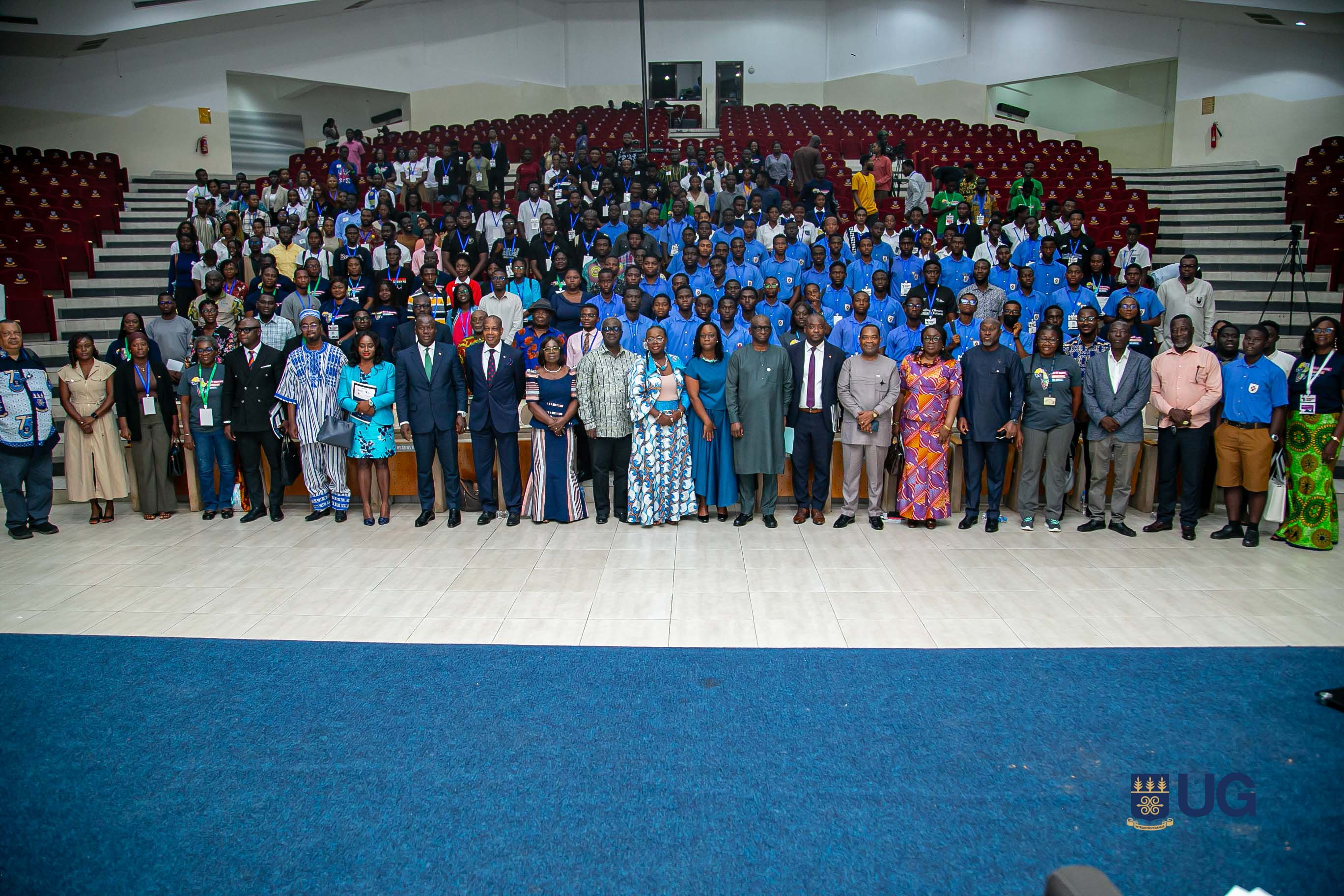
The University of Ghana has marked the climax of the 2026 Day of Scientific Renaissance of Africa (DSRA) with a renewed call for African-led research, stronger collaborations and nature-based solutions to advance equitable development across the continent.
Held under the theme, "Equitable Development: Research, Collaborate, Empower," the event brought together researchers, policymakers, industry leaders, development partners, faculty, staff and students to reflect on the role of science and innovation in addressing Africa's development challenges.
The event also commemorated the 15th anniversary of the University’s Research and Innovation Directorate (RID).
The celebration marked the conclusion of a month-long programme of activities held throughout June, a month designated by the African Union to promote science, technology and innovation and celebrate scientific achievements across the continent. The University’s Colleges, departments, centres and institutes organised more than fifty activities, including lectures, seminars, exhibitions, innovation showcases, policy dialogues, community engagements and career outreach initiatives.
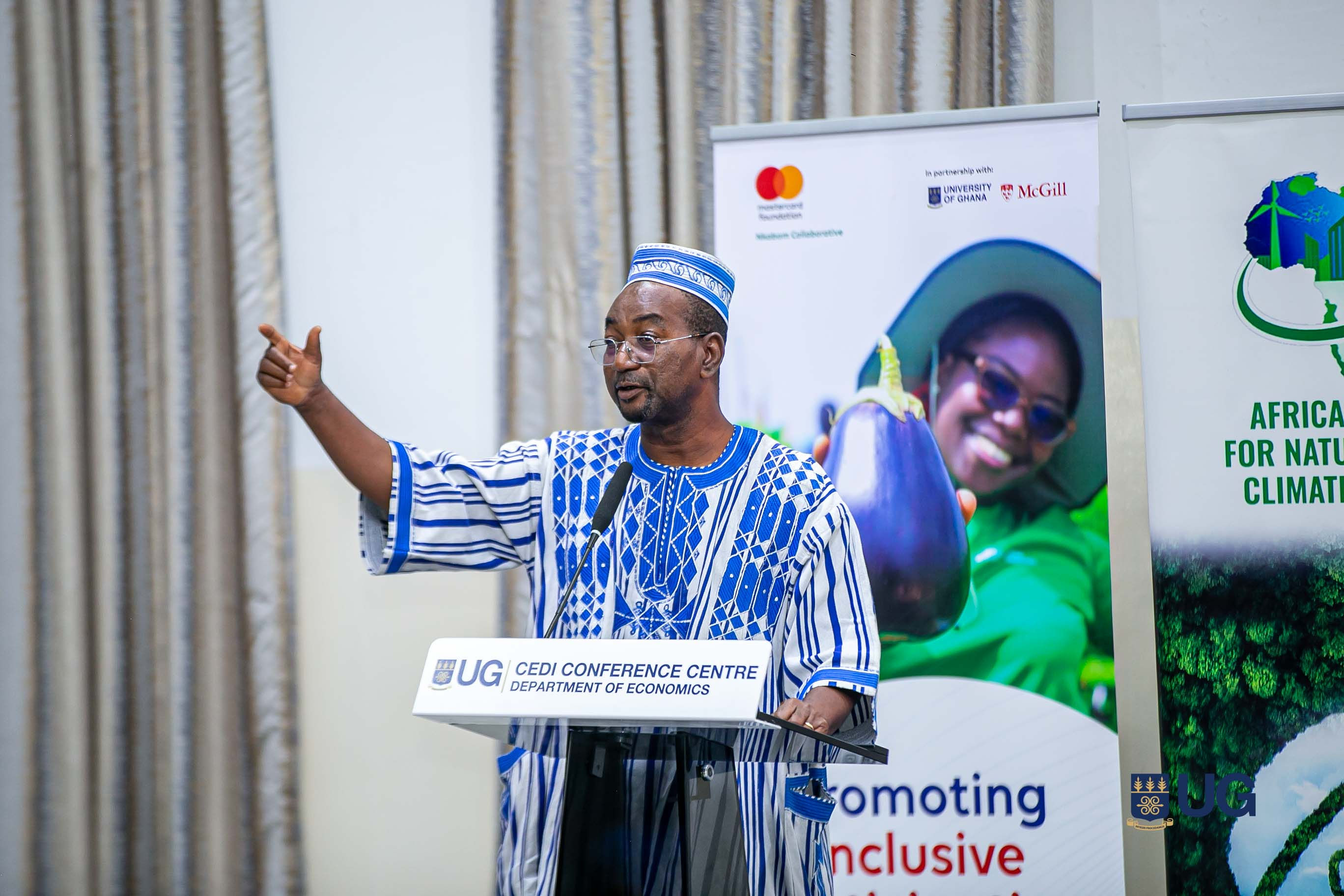
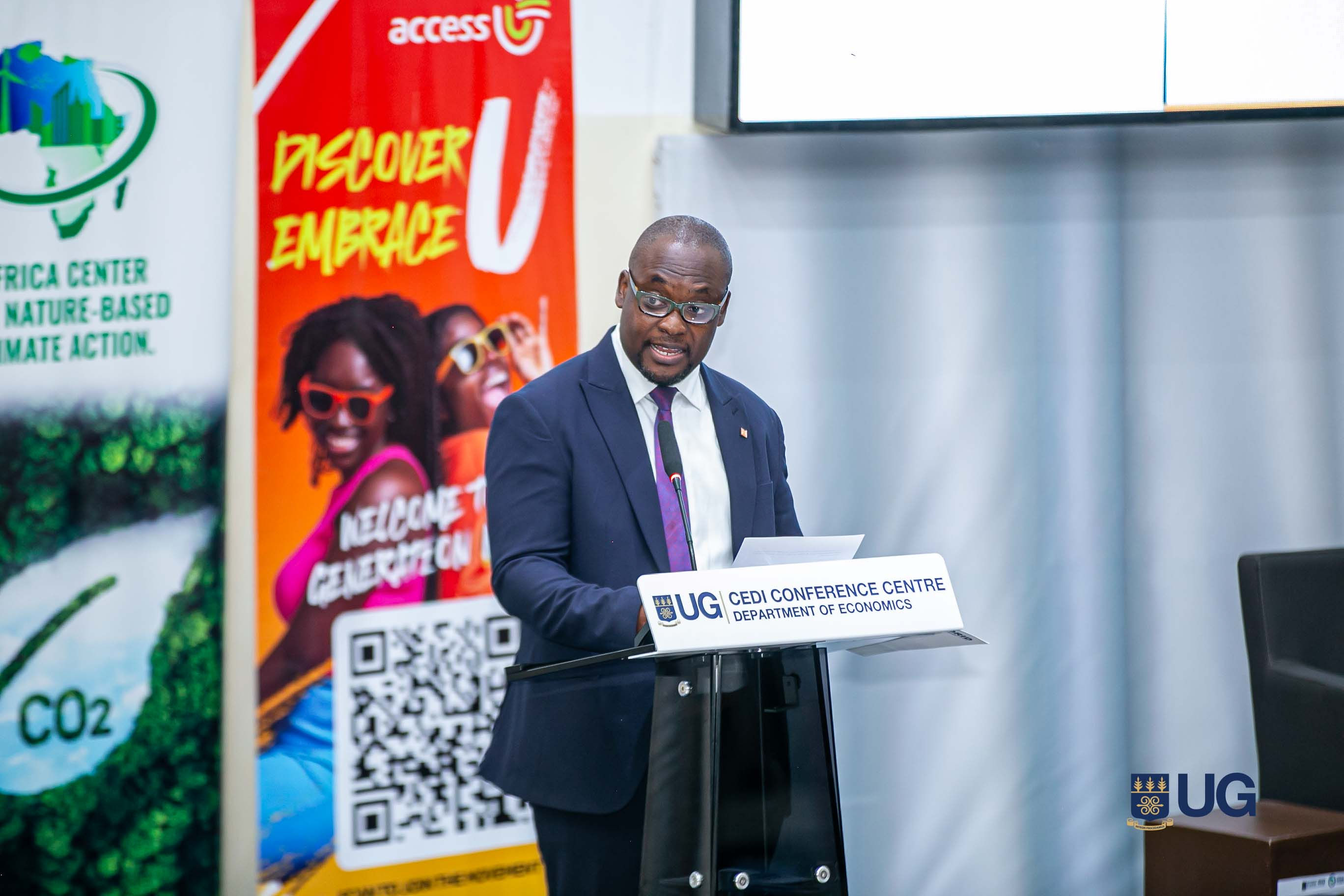
Delivering brief remarks at the climax event held at the Cedi Conference Centre, Director of the Research and Innovation Directorate, Prof. David Dodoo-Arhin, described DSRA as an important platform for showcasing research excellence, strengthening partnerships and connecting knowledge to policy, industry and communities.
He noted that since the University institutionalised the celebration in 2022, it has evolved into a vibrant institution-wide programme that reflects the depth and diversity of research across all disciplines.
Prof. Dodoo-Arhin also acknowledged the support of partners, including Access Bank Ghana Plc, the Mastercard Foundation's Africa Climate Collaborative, the Nkabom Collaborative and the Africa Centre for Nature-Based Climate Action, in advancing the University's research and innovation agenda.
In her address, Vice-Chancellor, Prof. Nana Aba Appiah Amfo, reaffirmed the University's commitment to producing impactful research that addresses national, continental and global challenges.
She noted that while Africa’s abundant natural resources remain important, the continent's future would be shaped by ideas, evidence, innovation and collaboration.
“The future of Africa will not be built by natural resources alone. It will be built by ideas, by evidence, by innovation, by collaboration and by universities that refuse to be satisfied with generating knowledge but insist on putting knowledge to work for society. That, to me, is the true meaning of a scientific renaissance,” she stated.
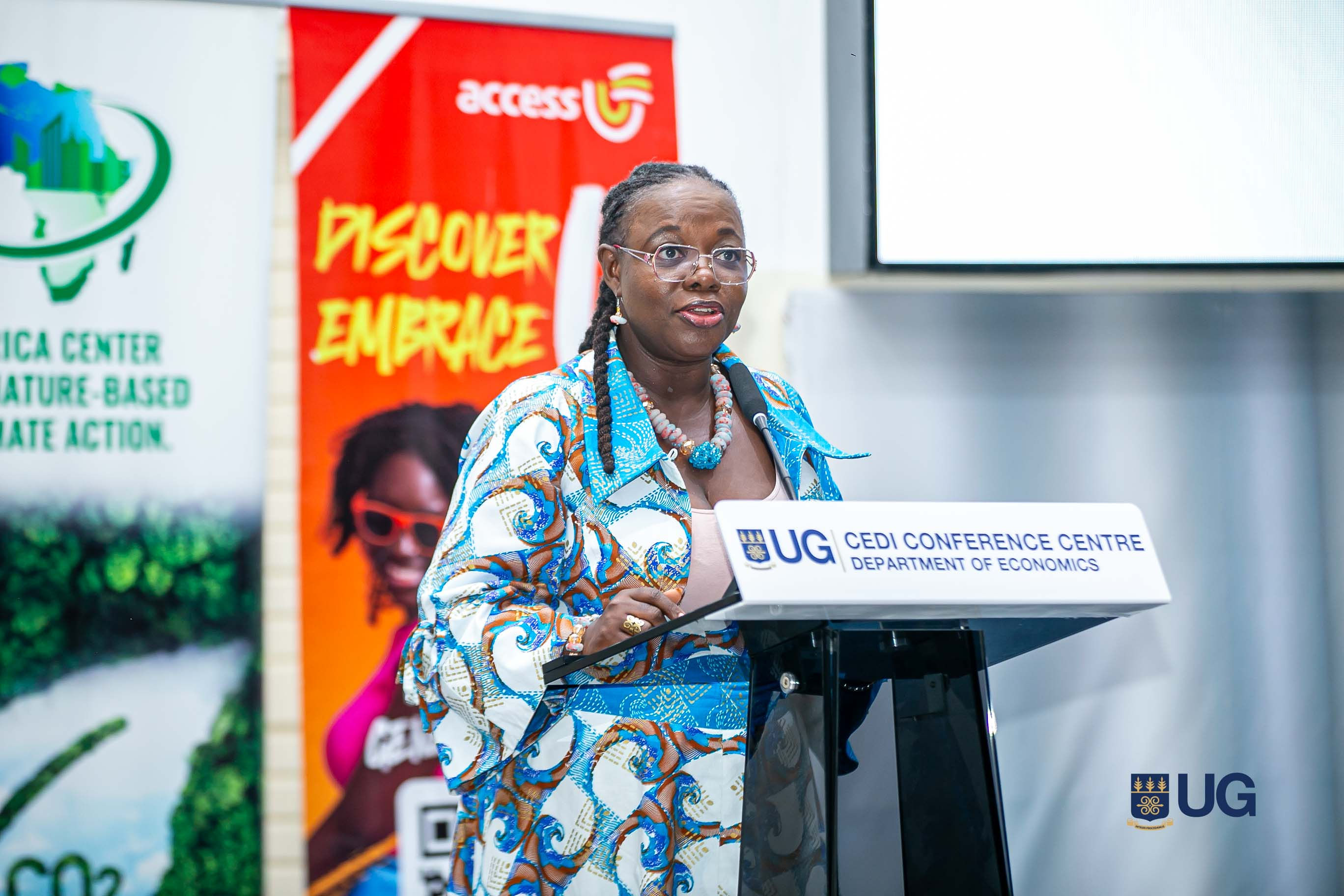
Prof. Amfo further encouraged participants to think beyond the day’s presentations and work towards building stronger partnerships across disciplines, institutions and sectors to ensure that research findings move beyond academic journals into classrooms, communities, industries and public policy.
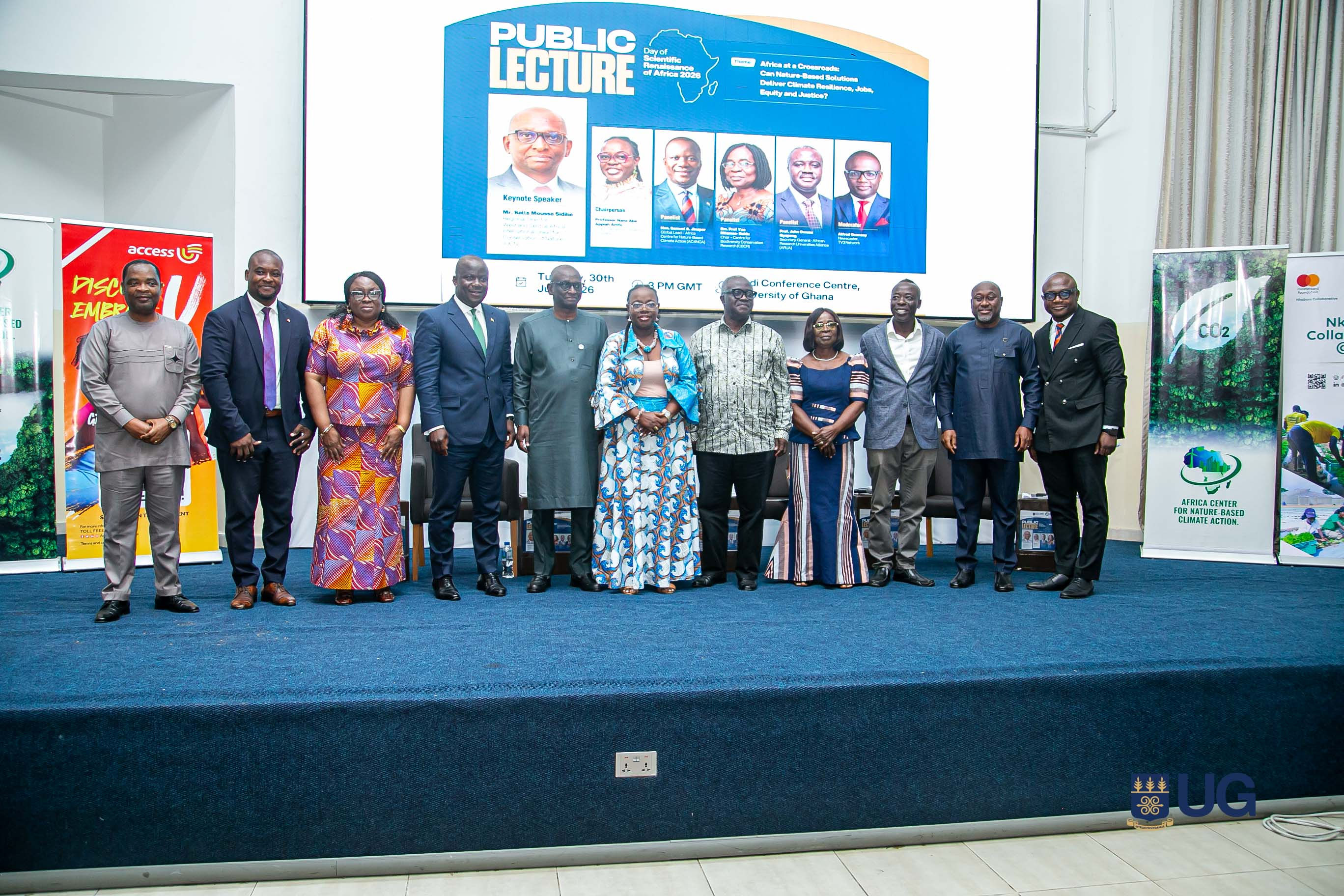
Through a collaboration with the Africa Centre for Nature-Based Climate Action (AC4NCA), the event also featured a keynote address, delivered under the Vice-Chancellor’s Occasional Lecture series on the topic, "Africa at a Crossroads: Can Nature-Based Solutions Deliver Climate Resilience, Jobs, Equity and Justice? Lessons from the Congo Basin". Keynote Speaker, Mr. Balla Moussa Sidibe, Regional Director of the International Union for Conservation of Nature, West and Central Africa Programme, highlighted the transformative potential of nature-based solutions in addressing climate change while promoting economic growth and social inclusion.
He observed that Africa stands at the intersection of two defining realities: a climate crisis that is reshaping landscapes, economies and livelihoods and a rapidly growing youthful population that presents enormous opportunities for green jobs and entrepreneurship.
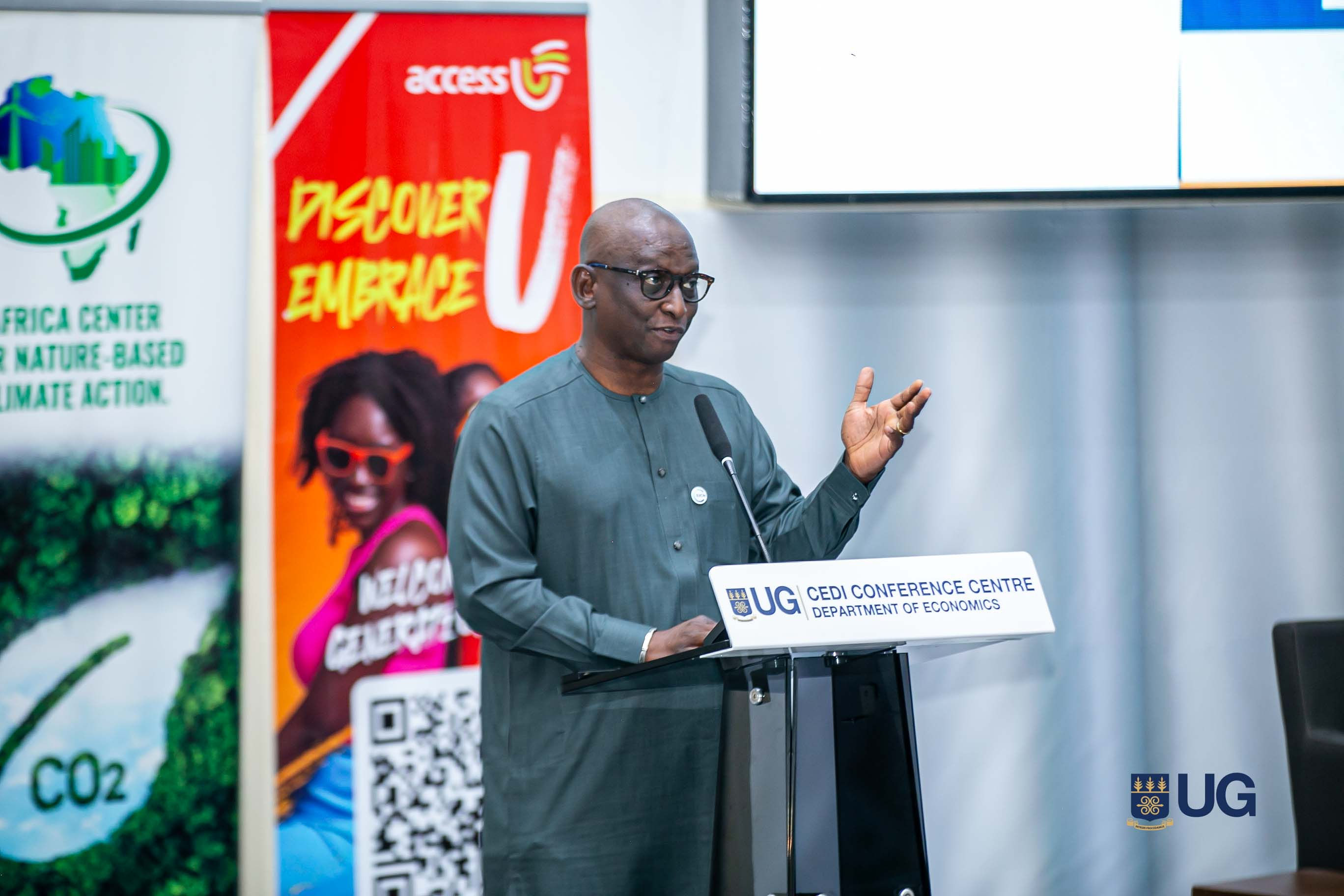
“Nature-based solutions provide an integrated approach to addressing climate change, biodiversity loss, unemployment and inequality while strengthening resilience and sustainable growth. Africa's future depends on choosing a development pathway that works with nature rather than against it,” he said.
Mr. Sidibe further stressed that conservation efforts must deliver both ecological and social benefits and empower women, young people and local communities.
A panel discussion on the theme, "Nature, Knowledge and Power: Advancing Equitable Development Through Inclusive Biodiversity Science in Africa," featured Emerita Prof. Yaa Ntiamoa-Baidu, Professor of Zoology and founding Acting Pro Vice-Chancellor, Office of Research, Innovation and Development; Prof. John Owusu Gyapong, Secretary-General of the African Research Universities Alliance (ARUA) and former Minister for Lands and Natural Resources and Global Lead for AC4NCA, Hon. Samuel Abu Jinapor.
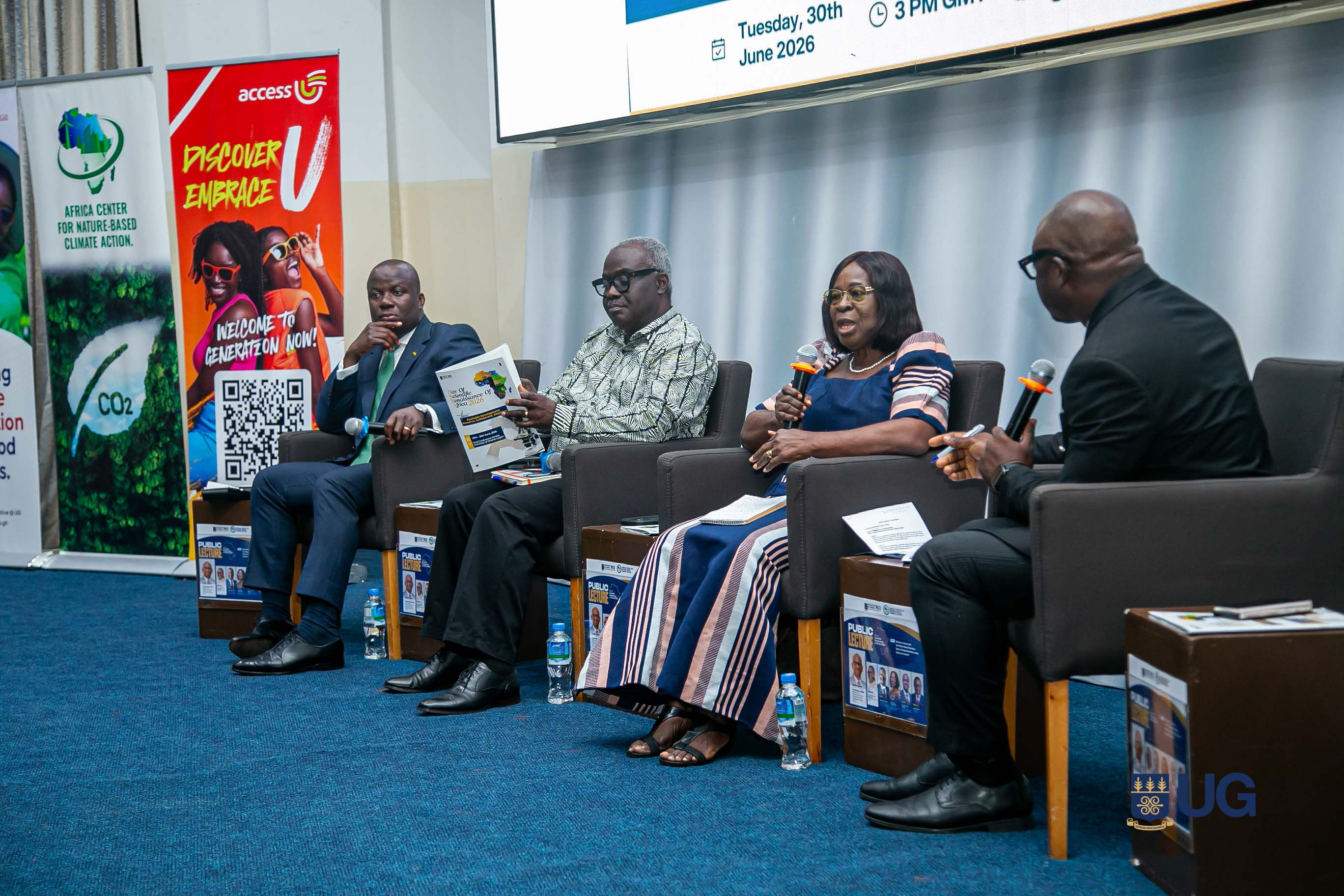
Moderated by TV3’s political talk show host, Alfred Ocansey, the panelists underscored the importance of inclusive approaches to biodiversity conservation, stronger links between research and policymaking and the need to develop robust policy and financing frameworks that can unlock the economic potential of nature-based solutions. They also highlighted the importance of community participation, sustained engagement between researchers and policymakers and the need to position nature-based solutions as both environmental and economic imperatives for Africa's development.
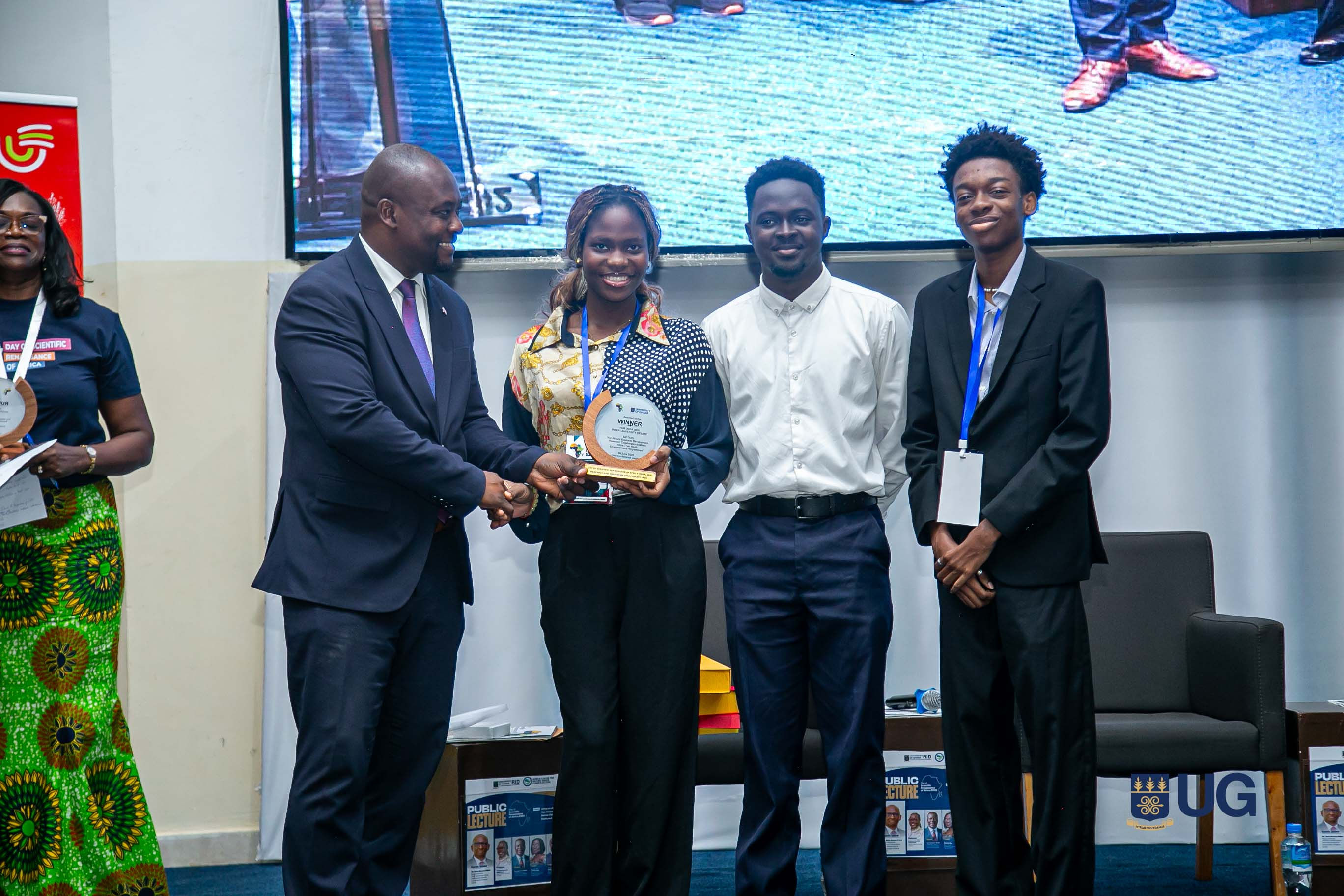
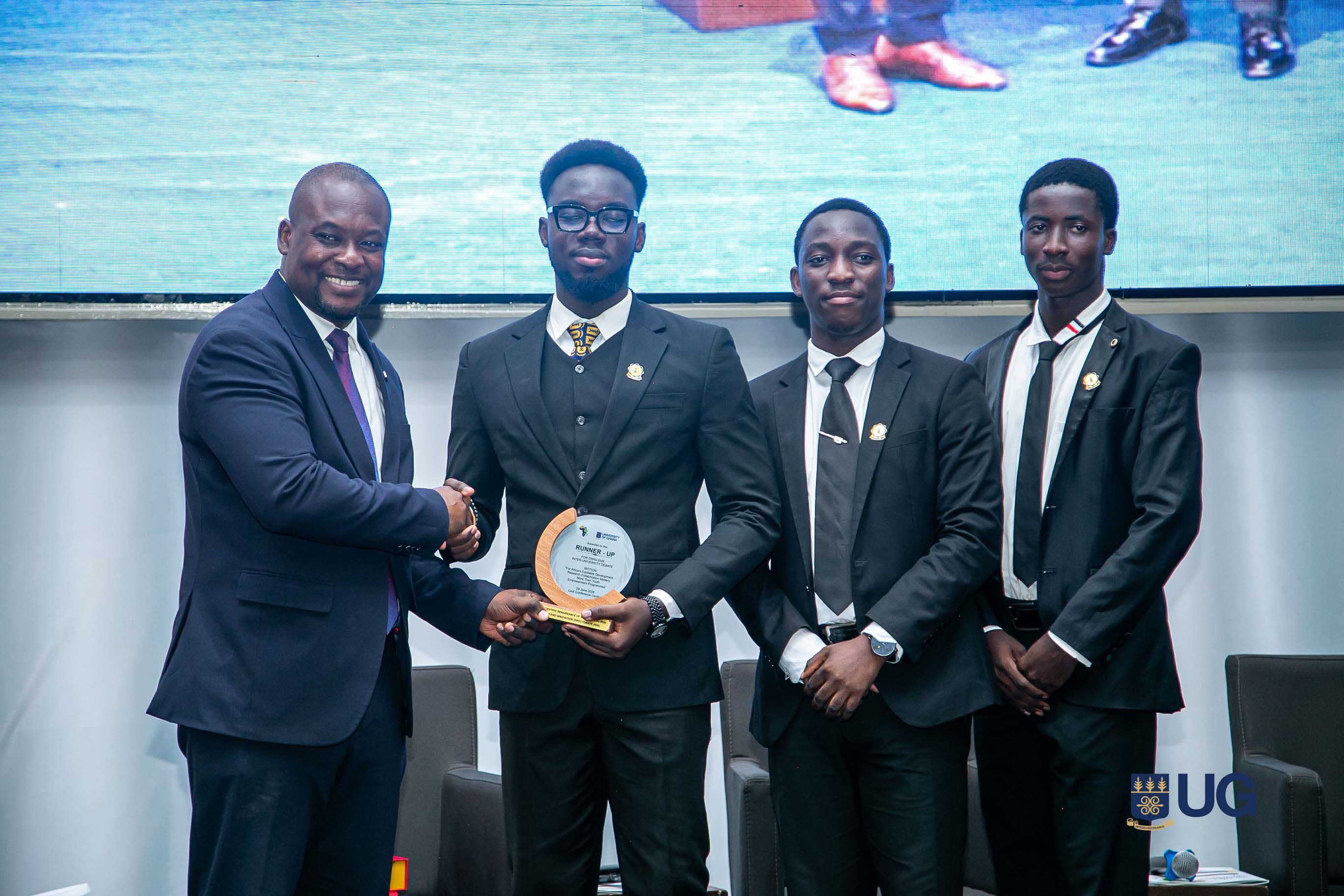
As part of the celebrations, the UG Debate Society and the Debate Society of the University of Professional Studies, Accra engaged in a debate on the motion, “Research Collaboration is More Effective Than Government Policy in Driving Rapid Equitable Development in Africa,” with the UG team emerging winners.
The event also featured a University-wide research exhibition, cultural performances by the Ghana Dance Ensemble, the presentation of Debate and Thesis Innovation Awards and the unveiling of a special edition of the University of Ghana Research Report, reaffirming the University's commitment to translating research into tangible societal impact.
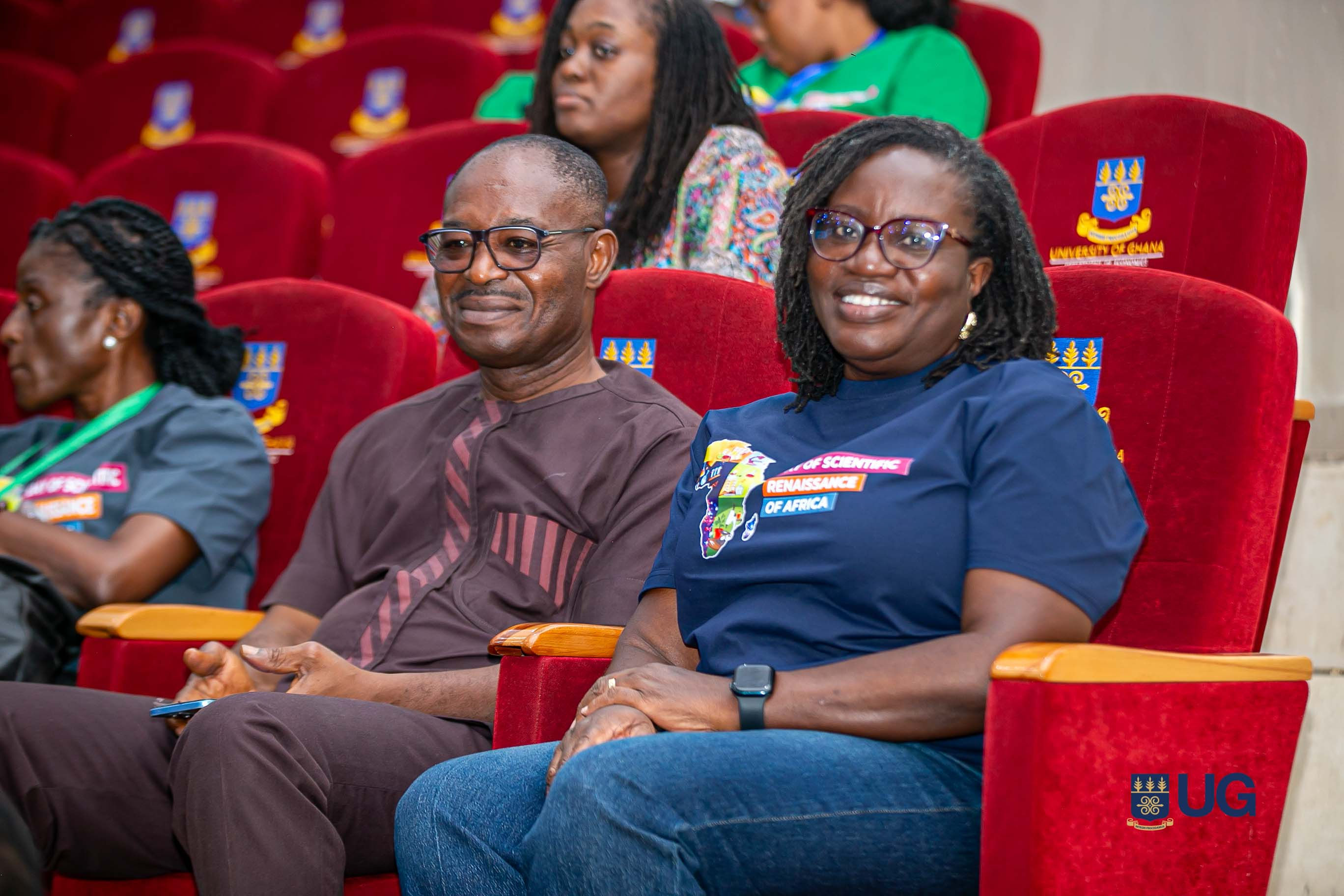
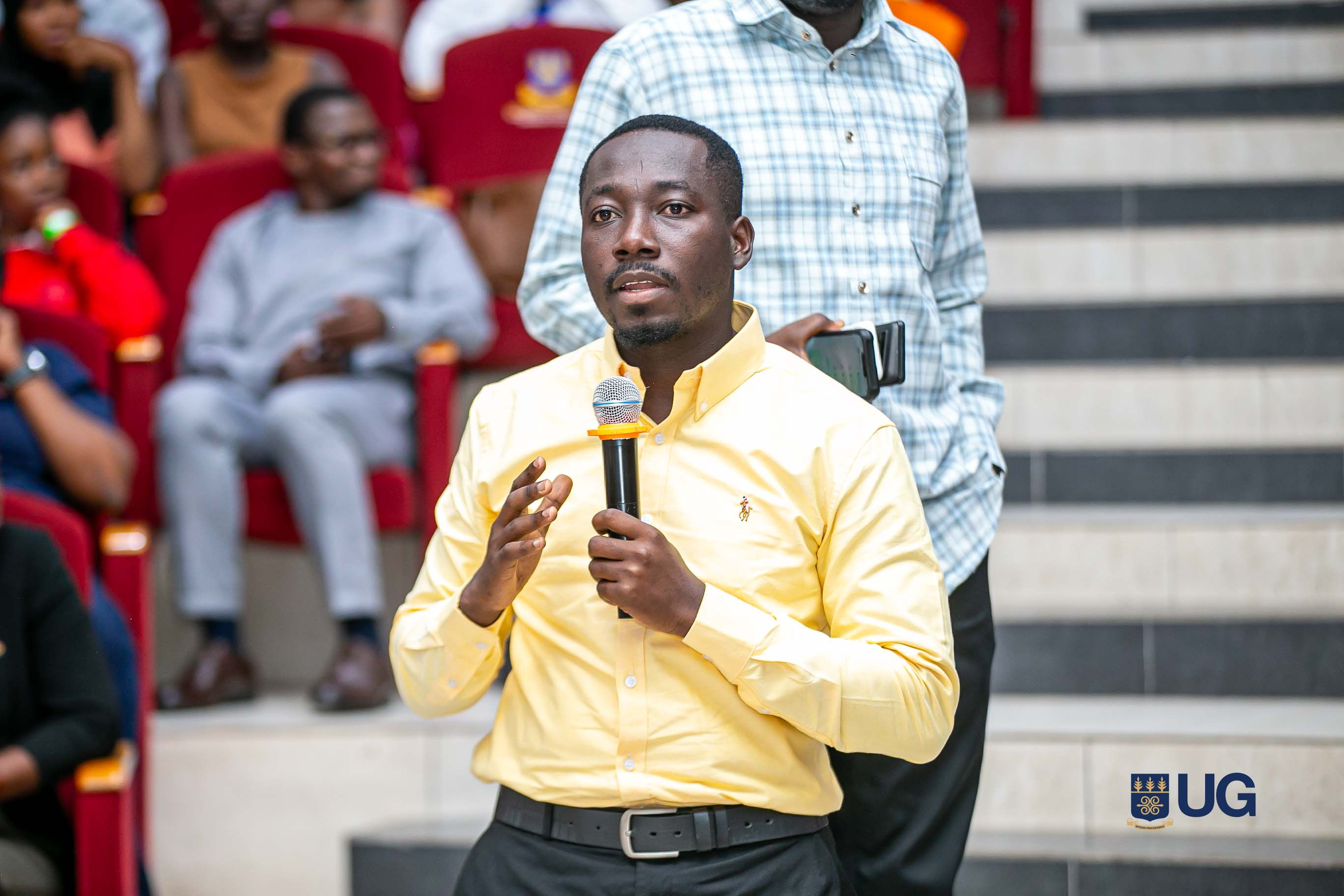
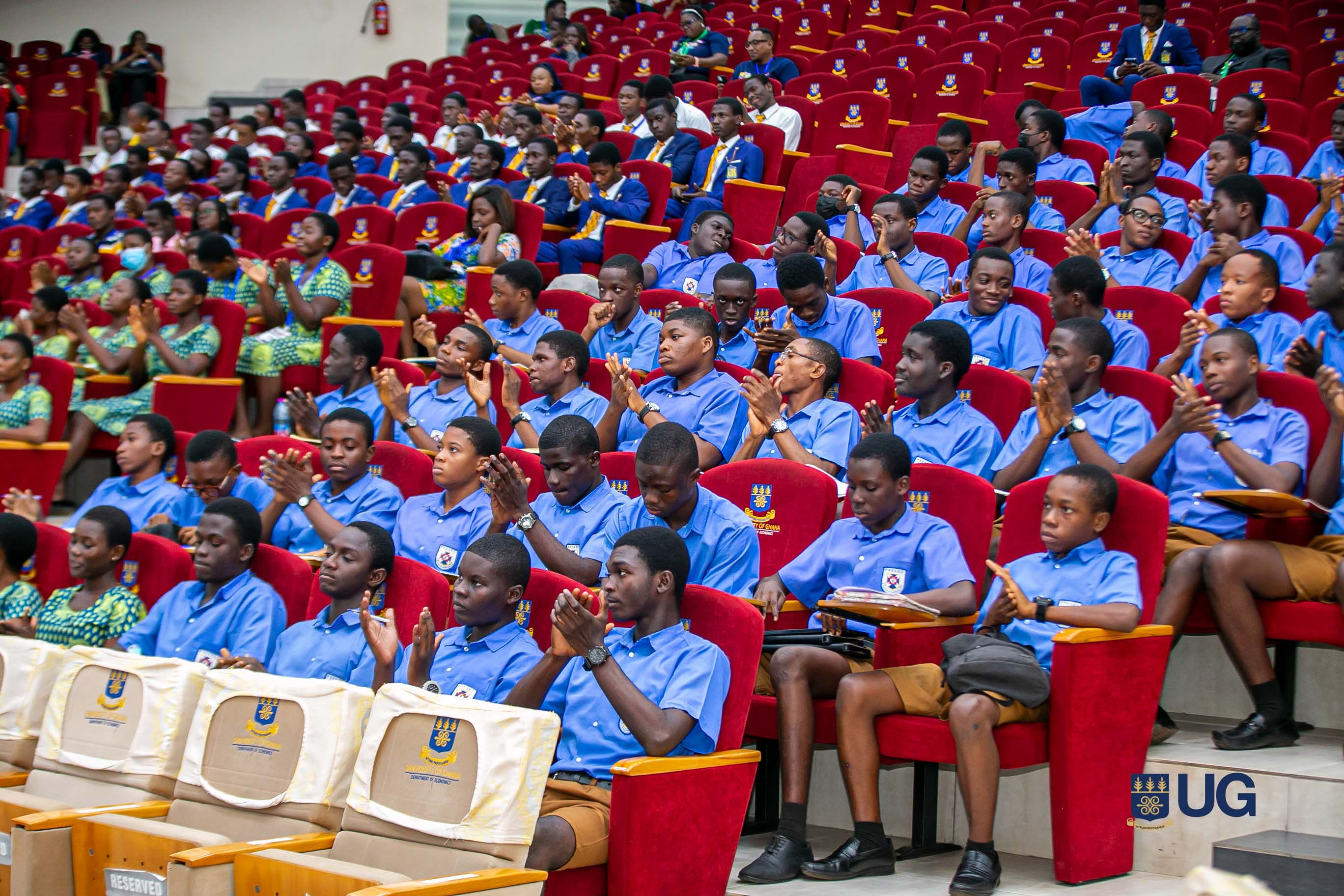
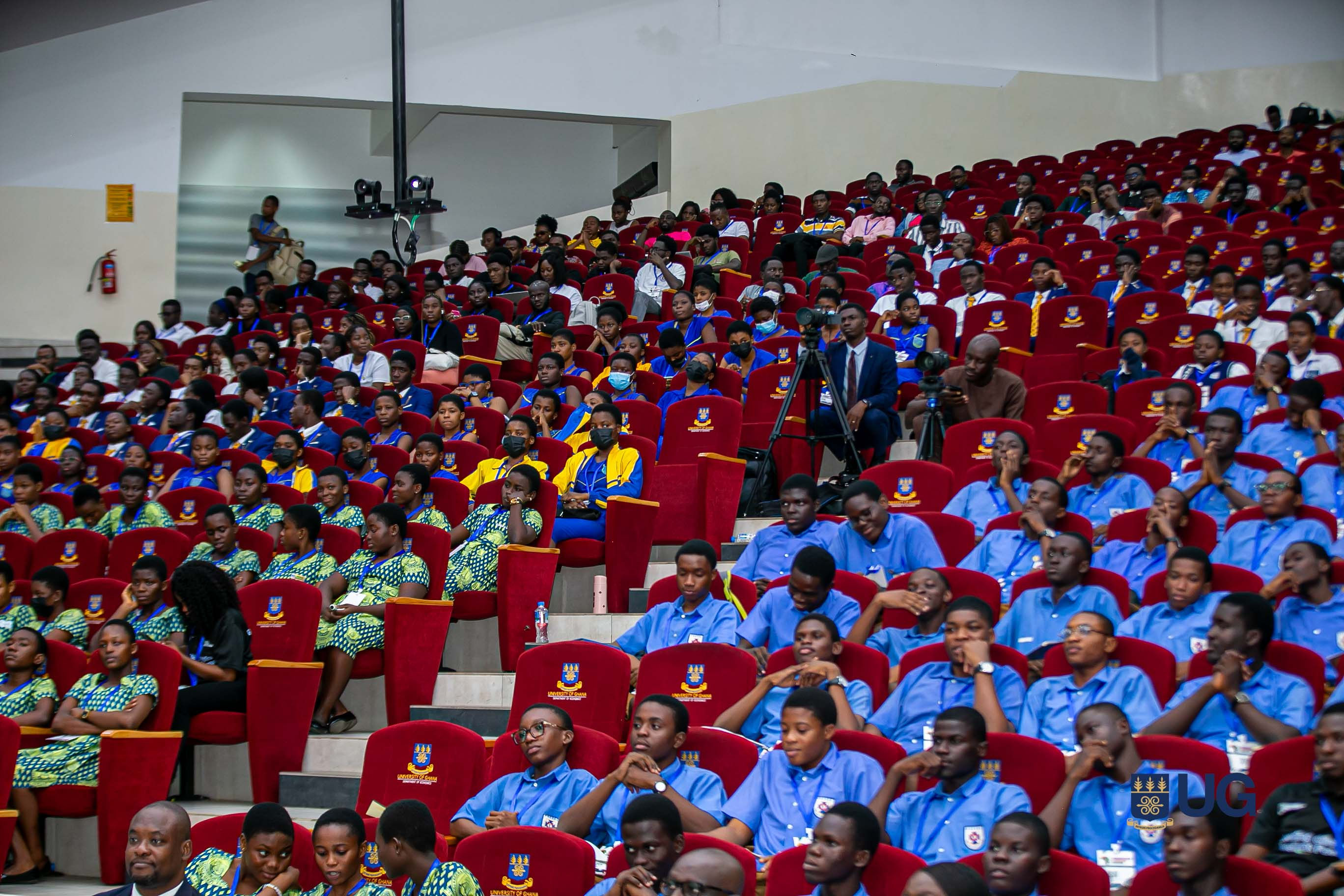
Present at the celebration were faculty, staff and students from across the University community as well as students from Presbyterian Boys' Secondary School, Labone Senior High School, Accra Girls Senior High School, Accra Academy and Accra Wesley Girls' High School, who had earlier participated in a career fair organised as part of the celebrations.