MIASA, CEGENSA and Partners Advance Women’s Academic Leadership Through Mentorship and Dialogue
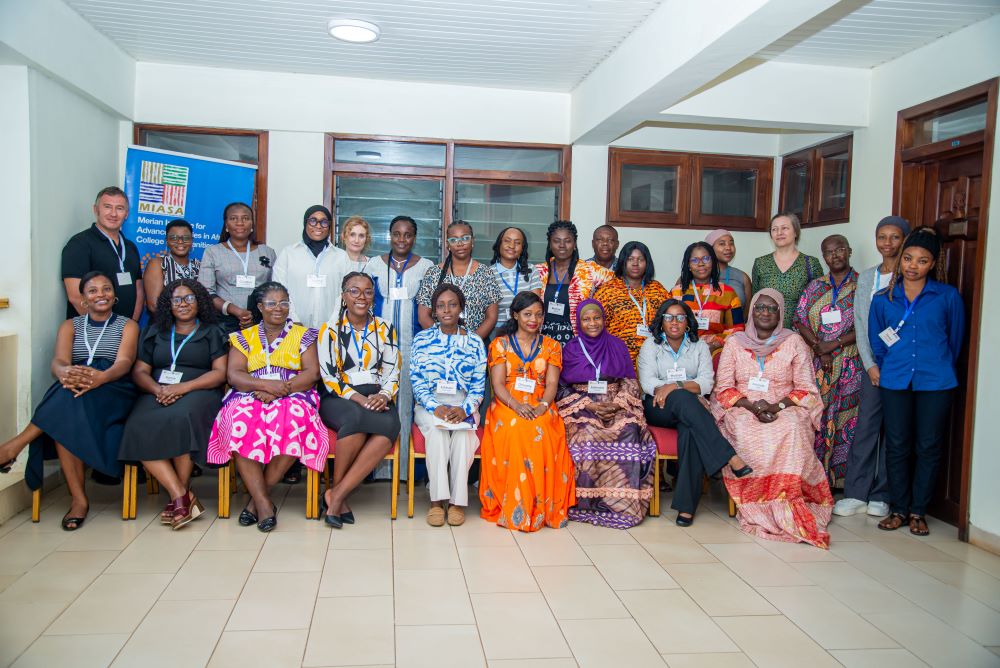
The Merian Institute for Advanced Studies in Africa (MIASA), in collaboration with the Centre for Gender Studies and Advocacy (CEGENSA), the German Historical Institute Paris (GHIP) and the Centre Marc Bloch Berlin (CMB), has organised the 2026 Female Academic Careers in Africa Workshop, bringing together 19 early and mid-career female academics from 11 African countries to strengthen leadership, mentorship and career development among women in academia.
A major highlight of the three-day workshop was a public roundtable on “Beyond Representation: Strengthening Women’s Leadership and Transforming Academic Cultures in African Higher Education,” which explored practical pathways for creating more inclusive universities and enabling women to influence institutional leadership, research and decision-making.
Delivering opening remarks on behalf of the Provost of the College of Humanities, Prof. Grace Diabah, MIASA Co-Director (Ghana), welcomed participants and underscored the importance of creating supportive environments that enable women academics realise their leadership potential. She noted that the workshop reflected the shared commitment of MIASA, CEGENSA and their partners to strengthening academic careers through mentorship, collaboration and professional development.
Dr. Stefan Rother, MIASA Co-Director (Germany), highlighted MIASA’s mandate to promote interdisciplinary scholarship and international academic exchange while supporting early and mid-career researchers across Africa. He noted that beyond advancing research excellence, MIASA continues to invest in mentorship, leadership development and collaborative networks that prepare emerging scholars to contribute meaningfully to knowledge production and higher education on the continent.
Moderated by former MIASA Co-Director (Germany), Dr. Susann Baller, the roundtable featured Prof. Gladys Nyarko Ansah, Head of the Department of Communication Studies and incoming Dean of the School of Languages at the University of Ghana; Dr. Aminata Diop, Head of the Department of Geography at Cheikh Anta Diop University, Senegal and Dr. Khaoula Matri, Senior Lecturer at the University of Sousse, Tunisia. The three reflected on their leadership journeys and examined the opportunities and barriers confronting women in African higher education.
Sharing her personal journey into academic leadership, Prof. Gladys Nyarko Ansah described mentorship, social support and personal determination as the pillars of her career progression. She recounted how senior academics recognised her potential early, encouraged her to pursue postgraduate studies and later guided her into academia. She also acknowledged the critical support of family, colleagues and mentors throughout different stages of her career, emphasising that academic success is rarely achieved in isolation.
Prof. Ansah further observed that while progress has been made in increasing the representation of women in higher education, significant disparities remain in access to leadership opportunities, promotions and institutional decision-making. She called for policy reforms to create more equitable pathways for women while encouraging female academics to remain proactive, work diligently to earn institutional trust and intentionally mentor younger women, free from unhealthy competition.
Drawing on her experience in Senegal, Dr. Aminata Diop highlighted the value of sustained mentorship, institutional support and professional credibility in leadership. She noted that trust built over years of dedicated service had earned her successive leadership appointments and encouraged emerging academics to invest in excellence, collaboration and long-term professional relationships.
From Tunisia, Dr. Khaoula Matri stressed the need to create safe spaces for dialogue and inclusive academic cultures that recognise diverse experiences. She advocated gender-responsive pedagogical approaches, stronger institutional support systems and platforms that amplify women's voices and leadership across universities.
Participants also called for greater solidarity among women scholars, more inclusive governance structures, gender-responsive institutional policies and stronger mentorship networks to help transform academic cultures across Africa.
The workshop formed part of MIASA’s broader commitment to strengthening women's leadership in higher education by equipping early- and mid-career academics with the skills, networks and confidence needed to navigate academic careers and assume leadership roles. Participants represented Ghana, Nigeria, Burkina Faso, Côte d'Ivoire, Mali, Senegal, Cameroon, Uganda, Kenya, Zimbabwe and South Africa, reflecting the workshop’s pan-African focus on building a more inclusive and transformative higher education landscape.