Students’ Academic Freedom Central to Africa’s Democratic Future - Prof. Appiagyei-Atua at Inaugural Lecture

Professor of International Law and Human Rights at the University of Ghana School of Law, Prof. Kwadwo Appiagyei-Atua, has emphasised the central role of students’ academic freedom in shaping democratic practices and the future of democracy in Africa.
He made the point while delivering the University of Ghana’s 9th Inaugural Lecture for the 2025/2026 academic year on the topic “The Student Question: Reclaiming Academic Freedom for Democratic Renewal in Africa,” at the Great Hall. The lecture was the final Inaugural Lecture for the academic year.
Prof. Appiagyei-Atua’s lecture examined academic freedom within the broader context of Africa’s intellectual heritage, colonialism, university governance, student participation and democratic development. He challenged the conventional focus on the State as the main threat to academic freedom, arguing that attention must also be given to internal structures and relationships within universities.

He noted that academic freedom can be undermined by different actors, including university managements, academics and students themselves. According to him, a university’s internal structures and relationships can create conditions in which students, despite being members of that academic community, have limited voice in institutional governance and academic decision-making.
A major focus of the lecture was the position of students within the academic freedom framework. Drawing on the 1990 Dar es Salaam Declaration, Prof. Appiagyei-Atua highlighted students’ rights to freedom of study, freedom to dissent and participation in academic programmes and university governance.
He stressed that students are rights-holders by virtue of being members of academic communities and should have a meaningful voice in matters affecting their education and the governance of their institutions.
Prof. Appiagyei-Atua also examined the marginalisation of students within university structures, describing academic communities as a vertically stratified institution in which students occupy a subordinate position despite being among its primary stakeholders.

He argued that academic freedom may exist formally while substantive freedom remains constrained by unequal power relations and institutional structures.
The Lecturer further explored student politics and the influence of partisan politics on university campuses. Prof. Appiagyei-Atua observed that political party involvement in student leadership can weaken independent activism, contribute to distrust and undermine the legitimacy of student representation.
He proposed measures to strengthen independent student representation, including transparent campaigns, non-partisan student leadership and greater collaboration with civil society.

He also advocated the democratisation of the classroom, pedagogy and university governance in the country. He argued for a shift from traditional models of education in which students primarily receive knowledge towards approaches that encourage dialogue, critical thinking and co-creation.
As part of this, Prof. Appiagyei-Atua presented a collaborative governance model involving the State, universities, faculty, students and civil society. The model is based on distributed authority, horizontal consultation, mutual accountability and recognition of the distinct but interconnected roles of the different actors.
In reflecting on the wider significance of student academic freedom, Prof. Appiagyei-Atua linked practices within universities to democratic development in society. He argued that the university provides an important space for developing democratic habits and that the way students experience participation, representation and accountability on campus can shape how they engage with democracy beyond the university.
He concluded that students’ academic freedom should be understood beyond university campuses, describing it as a mechanism through which democratic habits reach the wider society.
Chairperson for the occasion and Vice-Chancellor of the University, Prof. Nana Aba Appiah Amfo, was full of praise for the intriguing and thought-provoking lecture and the nuances presented by Prof. Appiagyei-Atua in addressing the question of students’ academic freedom and its relationship with democratic development.

She acknowledged the challenges surrounding academic freedom and student participation within universities, while emphasising the importance of creating an environment where all members of university communities can contribute meaningfully to institutional life.
On behalf of the UG community, the Vice-Chancellor commended Prof. Appiagyei-Atua for rising through the academic ranks to become a full Professor and for his contributions to international law, human rights scholarship and academic discourse.
In earlier remarks, the Registrar of the University, Mr. Michael Opare Atuah, noted that Inaugural Lectures remain an important University tradition through which the institution honours and celebrates the scholarly contributions of its academics.
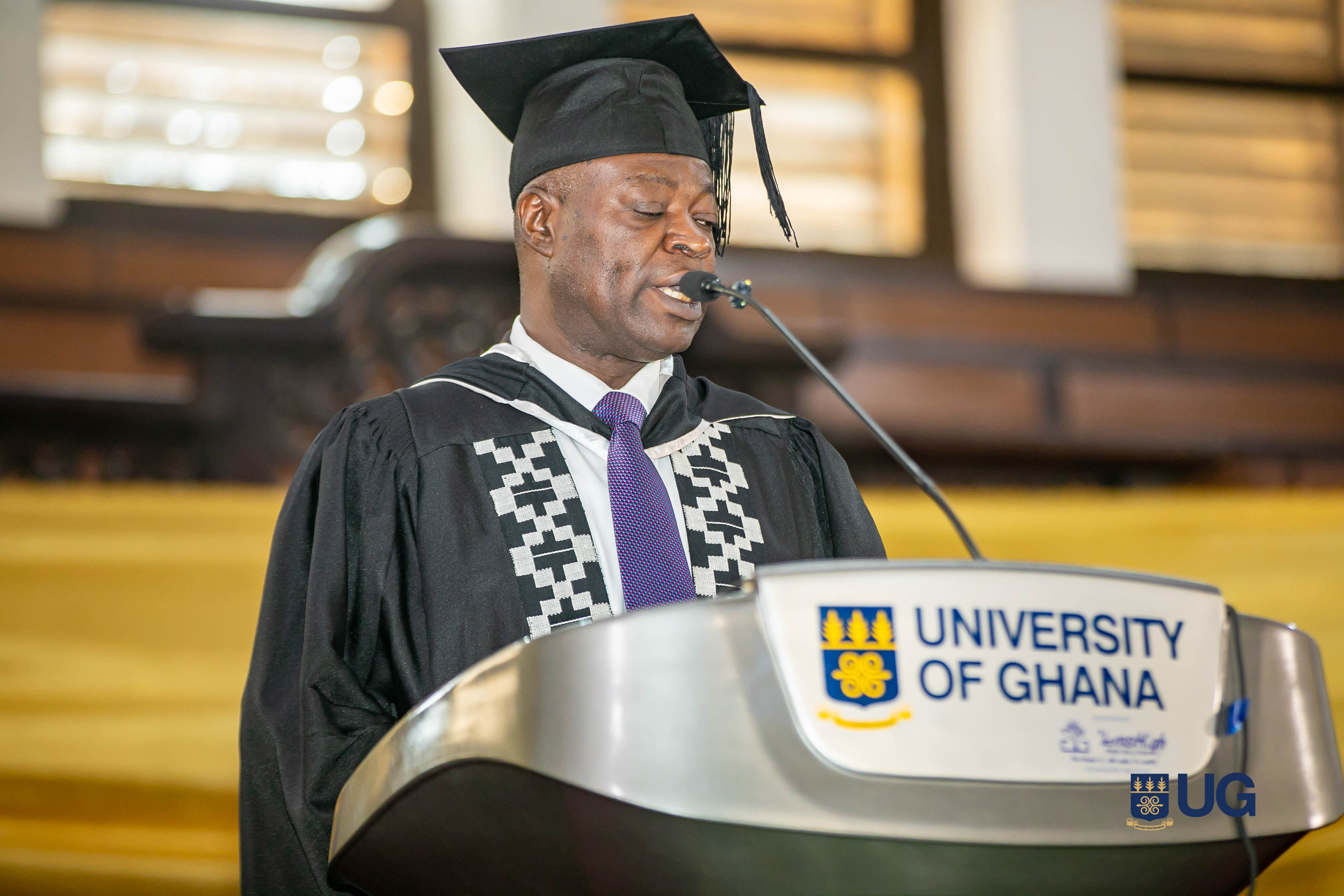
He congratulated Prof. Appiagyei-Atua on the delivery of his Inaugural Lecture and noted that it was the final lecture in the University’s series for the academic year. He also extended congratulations to the other professors who delivered their Inaugural Lectures during the academic year.
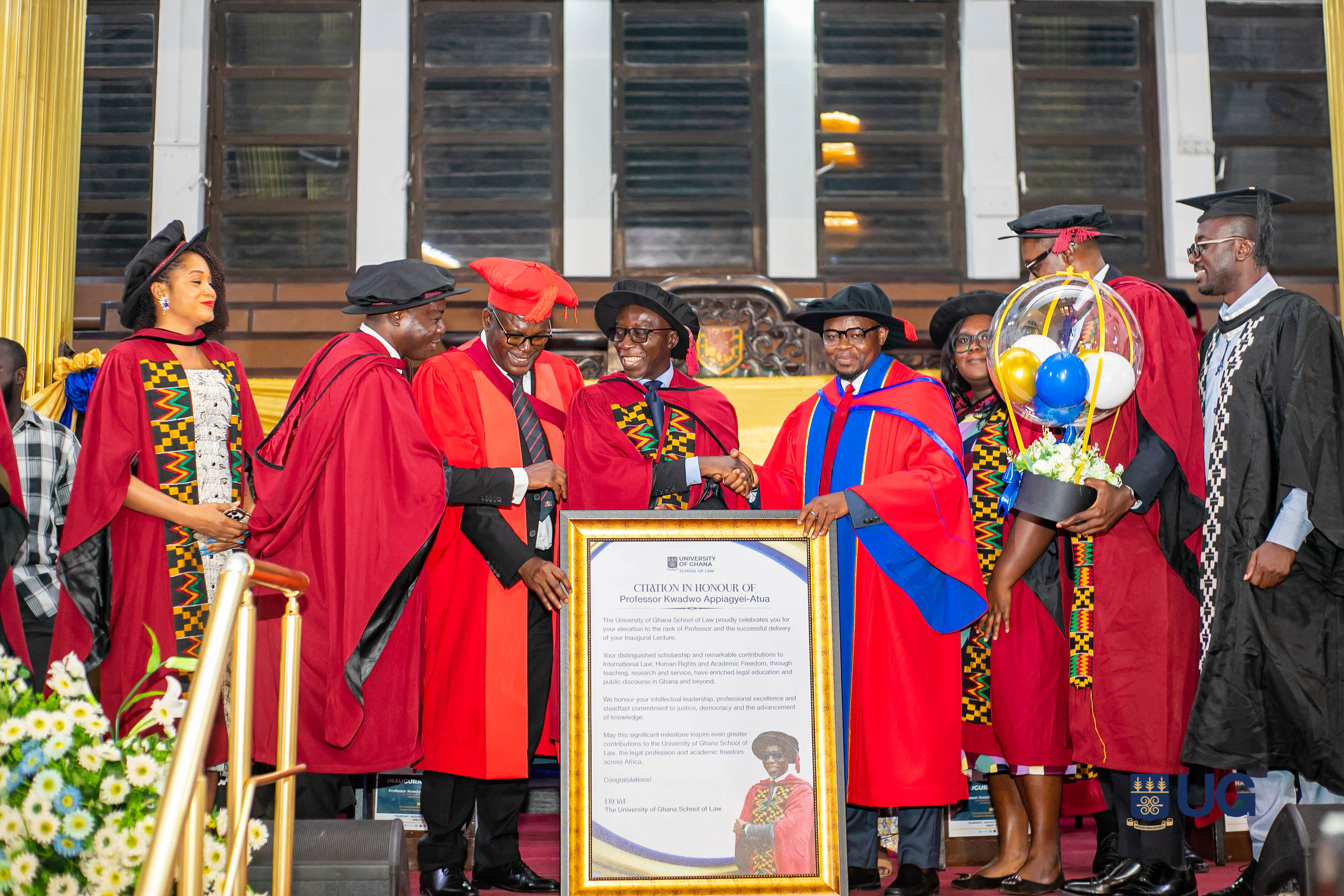
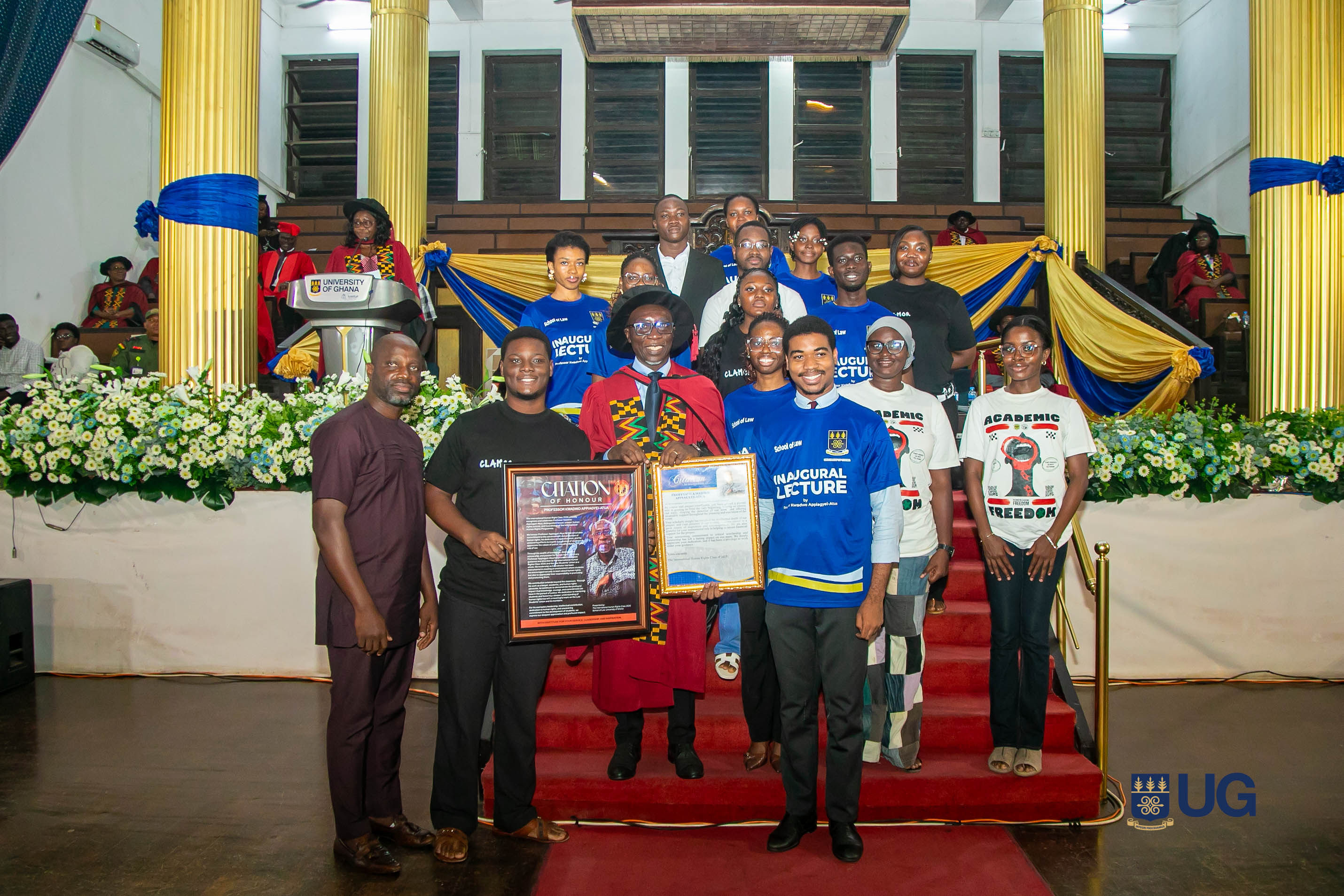
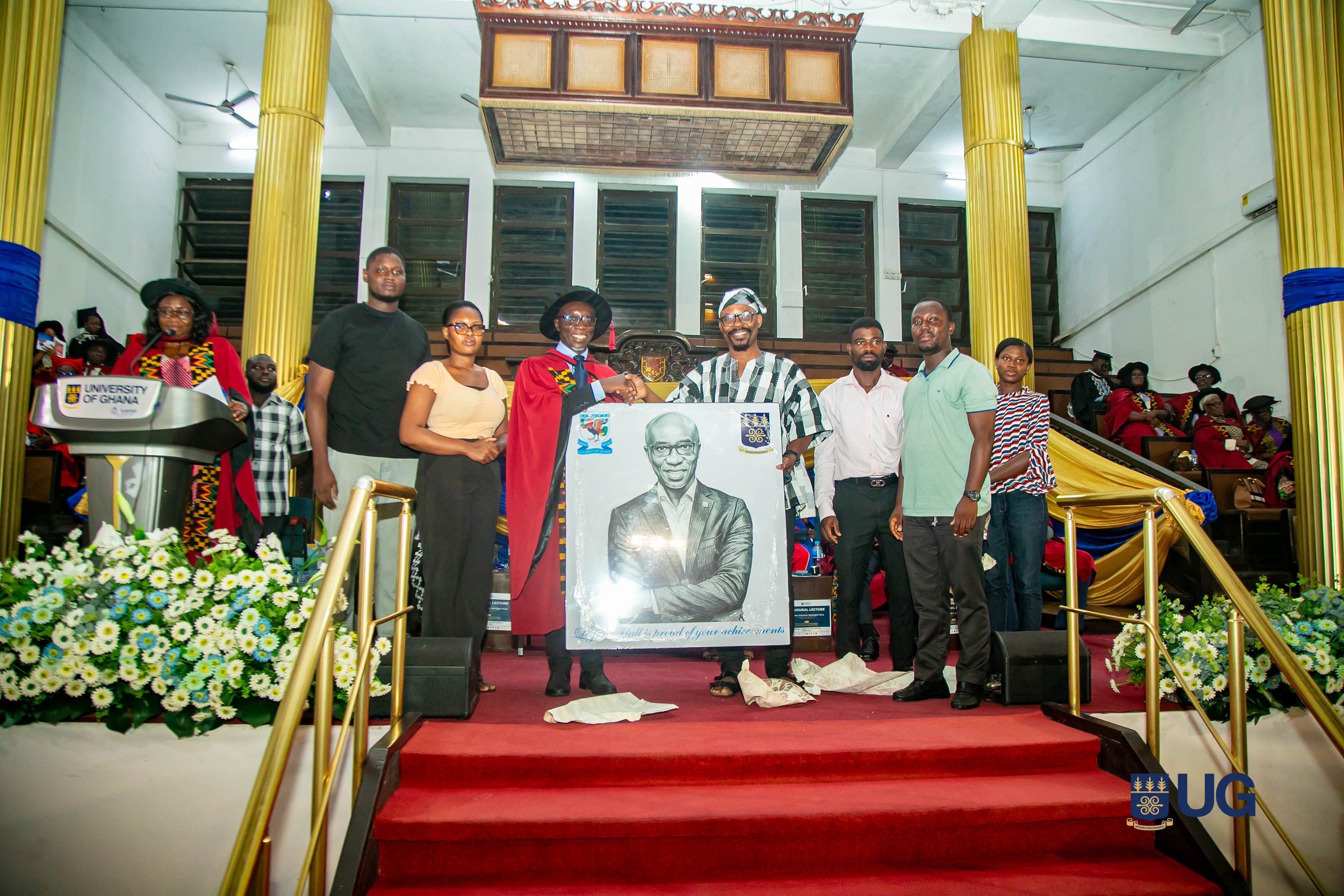
Following the conclusion of the lecture, presentations from the School of Law, Research and Innovation Directorate, Legon Hall and his family, among others, were made to Prof. Appiagyei-Atua, along with a package from Promasidor Ghana, beverage sponsors of the Inaugural Lectures at UG.